CoinPayments Clone Script Development: Build a Multi-Crypto Payment Gateway

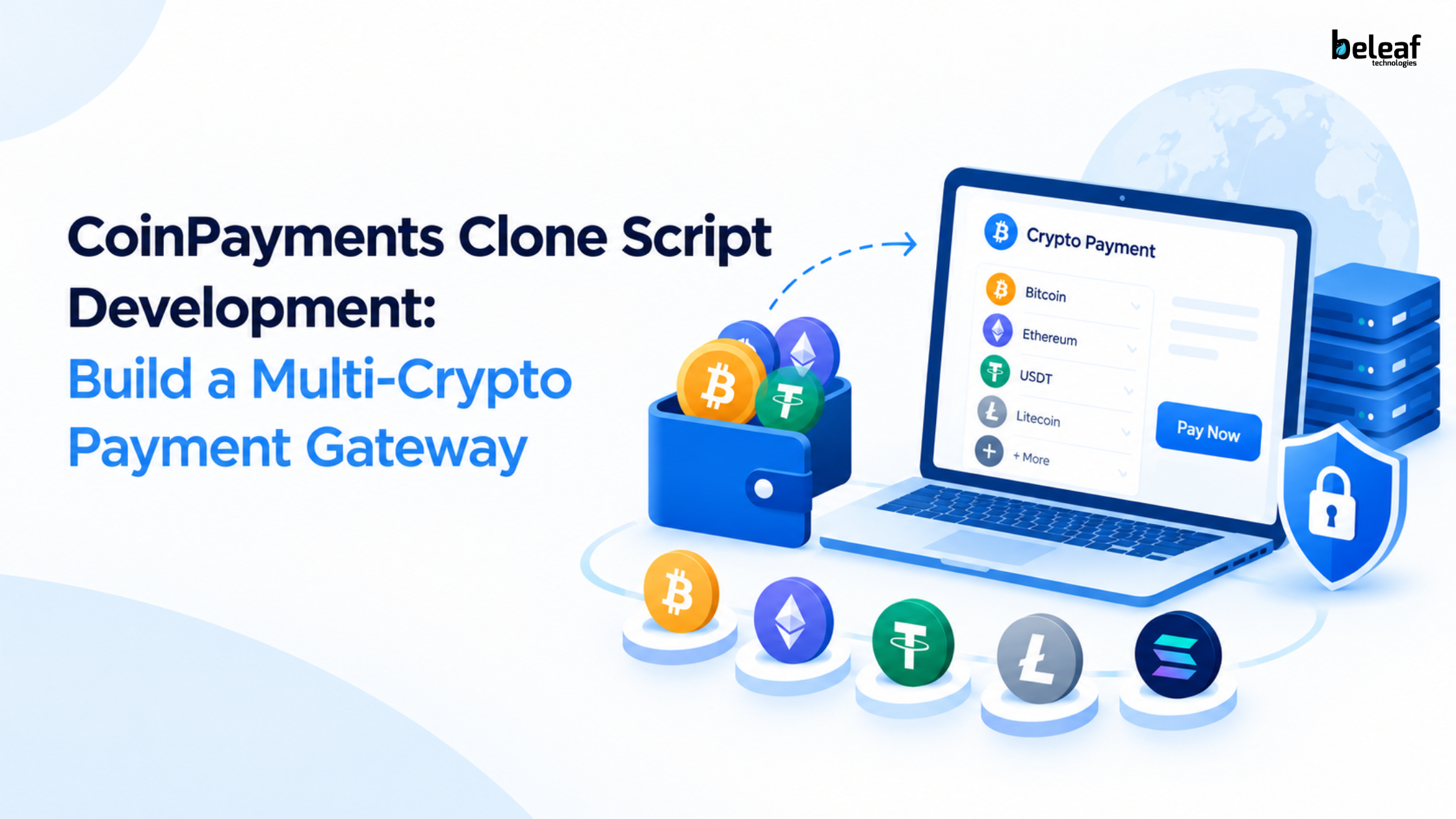
What if a business could accept multiple cryptocurrencies through one payment infrastructure instead of building a separate payment system for every digital asset?
As cryptocurrency adoption expands across e-commerce, Web3 platforms, gaming, SaaS, marketplaces, and digital services, businesses increasingly need payment infrastructure that can handle multiple cryptocurrencies, wallets, transactions, conversions, and settlements from one platform.
A CoinPayments style solution can provide the foundation for building a multi-crypto payment gateway where merchants can accept digital assets, generate payment requests, monitor transactions, manage settlements, and integrate crypto payments into their existing applications.
But developing such a platform involves much more than creating a crypto wallet and connecting a blockchain.
This blog explains CoinPayments clone script development from scratch, including its architecture, core components, payment workflow, security, blockchain integration, APIs, merchant tools, and important considerations for building a scalable crypto payment gateway.
What Is a CoinPayments Clone Script?
A CoinPayments clone script is a customizable software solution designed to provide functionality similar to a multi-cryptocurrency payment gateway.
The goal is not to copy proprietary branding or source code. Instead, the concept is to develop an independent platform with comparable categories of functionality and customize it for a specific business model.
A typical multi-crypto payment gateway can allow merchants to:
- Accept multiple cryptocurrencies
- Create payment requests
- Generate crypto payment addresses
- Monitor blockchain transactions
- Track payment status
- Manage wallets
- Process refunds where supported
- Convert or settle supported assets
- Access transaction reports
- Integrate payments through APIs
The platform essentially acts as an infrastructure layer between merchants, customers, blockchain networks, wallets, and payment services.
How Does a Multi-Crypto Payment Gateway Work?
Understanding the payment workflow is essential before starting development.
Step 1: Merchant Creates a Payment Request
A merchant creates an invoice or payment request through the dashboard or API.
The request can contain information such as:
- Order ID
- Amount
- Currency
- Accepted cryptocurrencies
- Expiration time
- Customer information
- Callback URL
The gateway then generates the required payment information.
Step 2: Customer Selects a Cryptocurrency
The customer chooses one of the supported cryptocurrencies. The gateway calculates the corresponding crypto amount based on the configured exchange rate source.
For example, if a product is priced in fiat, the system can calculate the equivalent cryptocurrency amount at the time of payment.
Step 3: Payment Address Is Generated
A blockchain address or payment destination linked to the transaction is provided by the platform.
Depending on the blockchain and wallet architecture, address management can involve dedicated addresses, address reuse policies, HD wallet infrastructure, or other mechanisms.
Step 4: Blockchain Transaction Occurs
The customer sends the cryptocurrency from their wallet.
For the transaction, the gateway keeps an eye on the pertinent blockchain.
Step 5: Transaction Confirmation
The platform detects the transaction and checks whether it satisfies the required confirmation policy.
The payment should not necessarily be considered final immediately after a transaction is broadcast.
The platform may wait for a defined number of blockchain confirmations depending on the cryptocurrency and the business's risk model.
Step 6: Merchant Receives Payment Status
The gateway updates the payment status and can notify the merchant through:
- Dashboard notifications
- Webhooks
- API responses
- Other configured notification channels
This allows the merchant's application to automatically update an order after successful payment processing.
Core Components of CoinPayments Clone Script Development
Building the platform requires several interconnected modules.
Merchant Dashboard
The merchant dashboard is the operational center of the payment gateway.
It can provide:
- Payment history
- Invoices
- Wallet balances
- Transaction status
- Settlement information
- API credentials
- Reports
- Integration settings
The dashboard should make complex blockchain activity understandable to merchants who may not have technical blockchain expertise.
Customer Payment Interface
The checkout interface should clearly display the payment amount, selected cryptocurrency, destination address, QR code where appropriate, expiration information, and transaction status.
A responsive design is particularly important because crypto payments are frequently initiated through mobile wallets.
Wallet Infrastructure
One of the most risky components is the wallet infrastructure. The system may need to manage deposit addresses, transaction monitoring, balances, withdrawals, and asset-specific wallet operations.
A business must decide whether the platform will use:
- Custodial wallets
- Non-custodial architecture
- Third-party wallet infrastructure
- Hybrid wallet architecture
The decision has major implications for security, compliance, and operational responsibility.
Blockchain Integration
A multi-crypto gateway requires connectivity with supported blockchain networks.
Depending on the assets supported, the platform may need integrations for different blockchain ecosystems and their respective RPC nodes, APIs, indexing services, or infrastructure providers.
The integration layer needs to handle:
- Address generation
- Balance checks
- Transaction detection
- Confirmation tracking
- Transaction broadcasting
- Network fees
- Blockchain errors
A modular integration architecture makes it easier to add additional networks later.
Payment Processing Engine
The payment engine connects merchant orders with blockchain transactions.
It manages payment requests, payment amounts, expiration, transaction matching, confirmations, status updates, and settlement rules.
A strong payment state system is important. Additional states may be required for expired, underpaid, overpaid, failed, or disputed transactions.
Exchange Rate Engine
Cryptocurrency prices can change fastly. When a retailer accepts cryptocurrency yet prices an item in fiat, a gateway must provide a trustworthy method for calculating conversion rates.
The rate engine can integrate approved market data sources and apply defined pricing, spread, and expiration rules.
Merchant API
Merchants can include cryptocurrency payments straight into their websites, apps, or e-commerce platforms using APIs.
Important API functionality can include:
- Create invoice
- Get payment status
- Retrieve transaction information
- Generate payment requests
- Manage settlements
- Receive webhook notifications
API authentication, rate limiting, validation, logging, and permission management should be built into the architecture.
Final Thoughts
CoinPayments clone script development can provide a foundation for building a customizable multi-crypto payment gateway, but successful development requires much more than replicating a familiar payment interface.
The platform needs reliable blockchain integrations, wallet infrastructure, payment processing, exchange rate management, merchant APIs, security controls, transaction monitoring, compliance capabilities, and scalable architecture.
For businesses entering the crypto payment sector, the most important objective should be creating infrastructure that merchants can trust. A strong multi-crypto gateway should make blockchain payments feel simple on the surface while handling the complexity of wallets, networks, confirmations, fees, security, and settlement behind the scenes.
As cryptocurrency and stablecoin payments continue developing, payment gateways that prioritize security, interoperability, reliability, compliance, and merchant experience will be better positioned to support the next generation of digital commerce.
Howdy, Stranger!